


An update to the Connect IQ mobile SDK for iOS is now available from GitHub. This release addresses an issue with newer devices and iOS 17, as well as other fixes.
An update to the Connect IQ mobile SDK for iOS is now available from GitHub. This release addresses an issue with newer devices and iOS 17, as well as other fixes.
Know the real you with the vívoactive® 5 smartwatch, the ultimate on-wrist coach designed to support your goals — whatever they may be. Featuring a bright, colorful display and up to 11 days of battery life, this GPS smartwatch is purpose-built with essential health and fitness features to help you better understand your body.
You’ll find vívoactive 5 support available today from the Connect IQ SDK manager. Update your apps today.
We have just released Connect IQ SDK version 6.3.0, which introduces the wheelchair API, increase sampling rates for accelerometer, gyroscope and magnetometer, and the addition of the Venu 3/3s devices. There are also a handful of bug fixes that were addressed from previous SDKs. Here is the full list of updates and changes:
General Changes
Simulator Changes
AppBase.onActive() and AppBase.onInactive().makeOAuthRequest() on Windows.Compiler Changes
initialize().Today marks the arrival of the new Venu® series smartwatch, the ultimate on-wrist coaches designed to support your goals. With up to 14 days of battery life, these GPS smartwatches are purpose-built with advanced health and fitness features to help you better understand your body. Plus, when paired with your smartphone, they allow you to easily make and take calls right from your wrist.
With the launch of the Venu 3, we are also excited to introduce several new Connect IQ APIs that are outlined below:
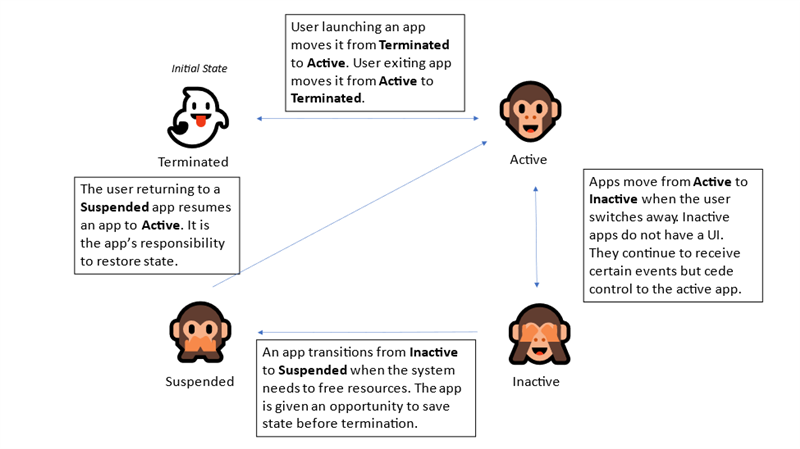
The Venu 3 introduces a new task switcher that makes it easy to switch between activities and apps on the device. To take full advantage of the task switcher, you need to utilize the full app lifecycle.
|
State |
Description |
|
Launched |
AppBase.onStart() is called when the app is launched or when transitioning from the suspended state. If the app is being resumed, the |
|
Active |
AppBase.onActive() is called when your app is transitioning from the inactive to active state. Active apps have access defined by the app type. When transitioning from inactive to active, access to sensors, ANT/BLE, will be restored. |
|
Inactive |
AppBase.onInactive() is called when transitioning from the active to inactive state. |
|
Suspended |
AppBase.onStop() is called when entering the terminated or suspended state. If the app is being suspended, the |
Based on the state your app is running in, you will have different levels of access to system resources:
|
|
Active |
Inactive |
|
Activity Recording |
With permission, you may be allowed to start and stop activity recording. |
If the app is recording an activity, recording will continue. If the app is not recording, it is not allowed to start or stop activity recording. |
|
GPS |
GPS access may be denied if another app is recording an activity. |
If the app is recording an activity and receiving position events, it will continue to receive events in the inactive state. If the app is not recording an activity, it is blocked from modifying the GPS state. |
|
ANT |
ANT access may be denied if another app is recording an activity. |
If the app is recording an activity, ANT access is permitted. If the app is not recording an activity, all open channels will be closed and will be reopened when transitioning from inactive to active. |
|
High Frequency Sensors (Accelerometer, Magnetometer, Gyro) |
If the app is recording an activity, access is permitted. If the app is not recording an activity, access may fail in a non-fatal way. |
If the app is recording an activity, access will be permitted. Otherwise, measurements can be retrieved at a maximum of 10 hz. |
|
Sensors |
If the app is recording an activity, access is permitted. If the app is not recording an activity, access may fail in a non-fatal way. |
If the app is recording an activity, access will be permitted. Otherwise, sensor access will be limited. |
|
Attention |
Access is allowed. |
Access is denied. |
The app launcher of the Venu 3 provides separation between activities and apps. If your app has the Fit permission, it will show in the Activities list.
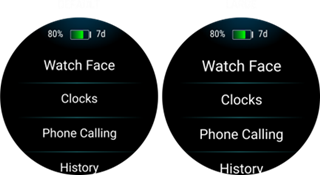
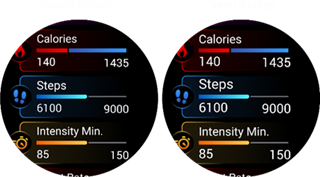
Venu 3 has a new setting that enlarges the sizes of fonts in menus, glances and application pages to enhance readability.
To add support for enhanced readability mode, check DeviceSettings.isEnhancedReadabilityMode at runtime to see if you should be using larger fonts. Implementing AppBase.onEnhancedReadabilityModeChanged() will let you know if the setting changed while the app was running.
The Venu 3 adds support for users with wheelchairs. When this is enabled, step tracking is replaced with push tracking, and new activities are available to the user.
When wheelchair mode is enabled, ActivityMonitor.Info will have zeroes for steps, stepGoal, floorsClimbed, floorsDescended and floorsClimbedGoal and will instead have values in pushes and pushGoal. Wheelchair mode will also remove COMPLICATION_TYPE_STEPS and COMPLICATION_TYPE_FLOORS_CLIMBED and enable COMPLICATION_TYPE_WHEELCHAIR_PUSHES.
The Venu 3 series is now available from the Connect IQ SDK manager. Update your apps to support them today.
Connect IQ watch faces typically operate in a low-power state where the system requests updates every minute. When the user gestures to look at the watch, the system will request the watch face enter a high-power state. During this period, typically 10 seconds, the watch face can enable timers and play animations. Use this time to add some action to your watch faces.
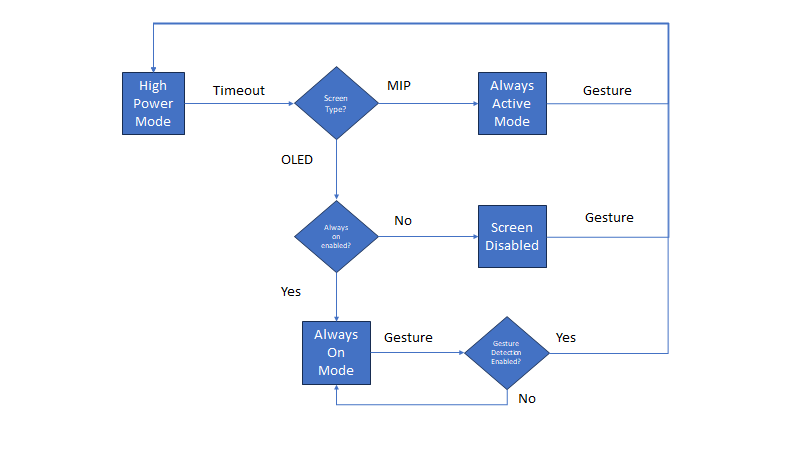
MIP watch faces by default update once a minute. High-power mode does allow drawing seconds or a second hand for a period, but sometimes the user wants that kind of information available the moment their eyes focus on the watch.
Always-active watch faces can perform a partial update of the screen every second. The update must operate under a 20-millisecond time frame, which does not allow updating the whole screen but can allow for an update on a small portion. For example, the seconds area of this watch face (highlighted in pink) could be updated once a second:
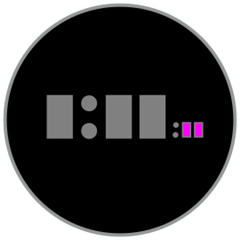
Devices with AMOLED displays typically disable the display when not in use to save power, but they do allow the user to enable an always-on mode. Because long-term display use affects the battery life and can wear down the display, Connect IQ has special rules for AMOLED always-on mode. When the watch face enters always-on mode, the watch face will only update every minute, and each update is limited to using 10% of the available pixels of the display. In addition, a burn-in prevention mechanism will further guide the use of the display on some devices.
Many AMOLED devices have a setting to disable the gesture that returns the watch face to high power mode to save power. To avoid a poor user experience, it is expected that Connect IQ watch faces for AMOLED devices support always-on mode and keep the watch face visible in these cases.
Get the SDK and update your watch faces today.
The Connect IQ Eclipse Plug-in has technically been unsupported since the release of the Visual Studio Code Monkey C Extension, but we've kept it available to allow developers time to transition from Eclipse to Visual Studio Code. As of August 28, the Eclipse plug-in will no longer be available for download. If you haven't already had the chance to shift your Connect IQ development environment to Visual Studio Code, now is a good time!
Thanks
- The Connect IQ Team
We have released Connect IQ SDK version 6.2.2, which contains some fixes for issues found in 6.2.1. Here is the list of changes and updates:
General Changes
Simulator Changes
WatchUi.makeReviewTokenRequest() on 3.4 devices.Application.onStart().Compiler Changes
Array.removeAll().We've released Connect IQ SDK version 6.2.1, which contains a few small fixes for issues found in 6.2.0. Here is a list of the changes and updates:
General Changes
Simulator Changes
Compiler Changes
In the second quarterly maintenance release of 2023, System 6 is getting some exciting new features that you can take advantage of in your Connect IQ apps.
You might be wondering about the new system number. After years of matching the SDK version with the Connect IQ API version, the SDK is getting a new versioning scheme:
|
Version Digit |
Meaning |
Value |
|
Major |
The current system level of the Connect IQ platform |
6 (For System 6) |
|
Minor |
The current annual quarterly maintenance release |
2 (For quarter two) |
|
Micro |
SDK release within a quarter |
0 (First release in quarter two) |
Make sense? Good. Now here is what's new.
Font support for Garmin devices can vary from device to device. All devices support Unicode bitmap fonts, but some devices support scalable fonts. If a device supports scalable fonts, the supported fonts are published in the Reference Guide as Scalable Font entries in the font list.
To access a scalable font, you can call Graphics.getVectorFont() using the name from the device reference as the :face argument. The :face argument also will take an array of face names. This allows you to specify backup font faces that are acceptable for your needs in case the device doesn’t support your preferred choice. You can also specify the font size in pixels.
Scalable fonts work with Dc.drawText() but can also be used with the Dc.drawAngledText() and Dc.drawRadialText(). These APIs only support scalable fonts and do not support custom fonts loaded as resources.
We have new syntax for layouts. In layout definitions, there are three ways to refer to fonts:
|
Reference |
Description |
Example |
|
System font reference |
Reference the standard FONT enumeration in the Graphics module. |
Graphics.FONT_SMALL |
|
Custom font reference |
Reference a font in application resources. |
@Rez.Fonts.MySmallFont |
|
Scalable font reference |
Reference a system scalable font. This is the font name and the pixel size separated by a colon. Additional font names can optionally be added separated by a comma. |
"#BionicBold:12,Roboto" |
API level 4.2.2 introduces Dc.drawBitmap2() with some powerful new features.
Connect IQ allows you to create two-dimensional affine transforms using the Graphics.AffineTransform class. AffineTransform provides access to the underlying transformation matrix and common operations like rotation, scaling and shearing.
To apply the transform, pass the AffineTransform into Dc.drawBitmap2() as the :transform argument in the options dictionary.
Sometimes you want the color of an asset, like an icon, to be user-definable. For example, you may want the complication icons on a watch face to match a user-defined theme color. One of the features of Dc.drawBitmap2() is the ability to apply a tint color to an asset. The :tintColor option can be used to specify a color to apply to a white asset.
As a developer, you want your users to review your apps after they’ve had positive experiences. Ideally, this would be a low-friction experience to maximize the number of users who leave positive reviews.
For compatible devices, the steps to leave a review are as follows:
To prevent user harassment, apps must request permission from the app store to perform a review request. The app store validates a number of factors, including if you have recently requested a review from a user and if the user is using the most recent version of the app. The token request can be made with the WatchUi.makeReviewTokenRequest() call. This call is asynchronous, and you must provide this call with a Lang.Method callback.
When the server responds to your review request, your callback will be invoked with the server response code and optionally the review tokens. The response codes are as follows:
| Response | Description | API Level |
|---|---|---|
| REVIEW_REQUEST_STATUS_GRANTED | Request is granted, and token has been provided | 4.2.0 |
| REVIEW_REQUEST_STATUS_DENIED | User does not meet review requirements | 4.2.0 |
| REVIEW_REQUEST_STATUS_FAILED | Cannot make review request at this time | 4.2.0 |
If you receive a token it should be valid for the current day. When you are ready for the user to review the app, you can use WatchUi.startUserReview() with the valid token from a token response.
The epix (gen 2) Pro series introduced a new feature called Red Shift that makes the watch easier to read in low light conditions. The Connect IQ simulator will now let you simulate red shift for testing purposes.
These System 6 features are now available for the following devices:
|
Scalable Fonts |
Bitmap Transformation |
On-Device Reviews |
|
epix(gen 2) |
Epix (gen 2) |
Edge® 540 |
Get the Connect IQ 6.2.0 SDK with the SDK manager today to update your apps with these exciting features.
Designed to perform all day, every day — fēnix 7 Pro series and epix Pro series take smartwatches to the next level. Offering solar charging, an always-on display and premium materials, fēnix 7 Pro is made for those who measure adventure in weeks, not hours. With always-on, bright AMOLED display, three new sizes and built-in flashlights on all models epix Pro is made for the best of the best.
The fēnix 7 Pro series and epix Pro series are now available from the Connect IQ SDK manager. Update your apps to support them today.


