I Monetized My Ski App, Here's What Happened

Ski Pin Connect IQ Store Page

About Ski Pin

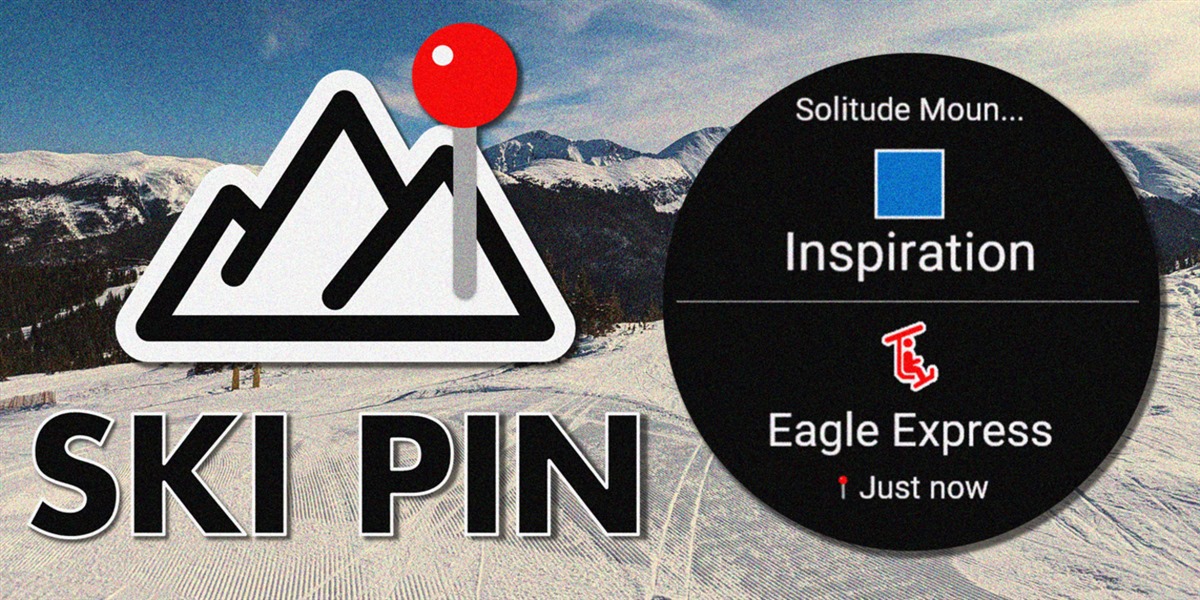
At the beginning of the 2026, I released a new data field for winter sports called Ski Pin. Ski Pin shows you the name of the ski run you're on, the run difficulty, and which lift is nearby. The CIQ app itself is straightforward, it gets your GPS coordinate and queries a custom web backend that checks the coordinate against OpenSkiMap data. Since there's a monthly cost to run the backend, I decided it'd make sense to monetize the data field to try to cover my costs. And I felt that the Ski Pin concept was unique enough in the CIQ ecosystem that passionate skiers may be willing to pay for the app.

I wanted to share my experience with monetization because I think it's valuable for other developers to see real numbers and understand if it's actually viable.

Monetization Math

For those who haven't looked into first-party monetization, there's a $100 annual fee and then a 15% service fee on all sales. At the beginning of the project, I didn't have a great understanding of how much the backend would cost to run. After doing some research I estimated that with modest adoption, it wouldn't be more than ~$20 a month. So my worst case annual cost would be around $100+$20*12months = $340/yr.

I really struggled with determining the price point for Ski Pin. I didn't want the price to be a significant barrier of entry, but I was eager to recoup my costs. To make $340, I would need to sell $400 in product to cover the 15% service fee. Since skiing is a seasonal sport, I figured a vast majority of my sales would occur in the first 4 months of the year, so I'd need to make ~$100/month. My goal was to make one sale a day on average. So monthly, $100/30 sales puts the price point at $3.33. I rounded that up to $4 to give some breathing room in case I didn't hit my target.
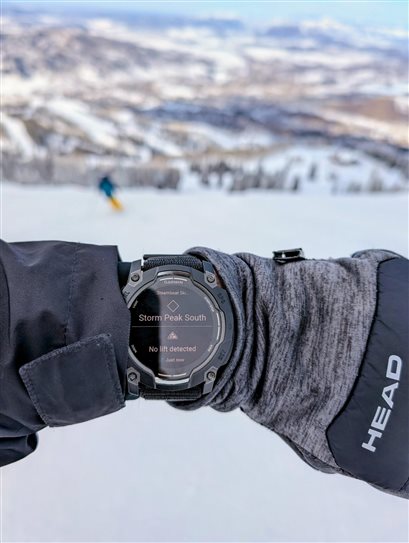
Ski Pin in the field

First Month Results

Looking back on January, two things worked in my favor. First, my backend cost estimate was high. My real cost was $8.46, significantly less than my $20 estimate. Second, I made a lot more sales than I expected! I sold 68 copies in January.

Below is a graph I'll be updating monthly with sales data. If I project out my monthly costs for the rest of the year with no additional sales, it looks like I'll still break even. That was my primary goal with this project.
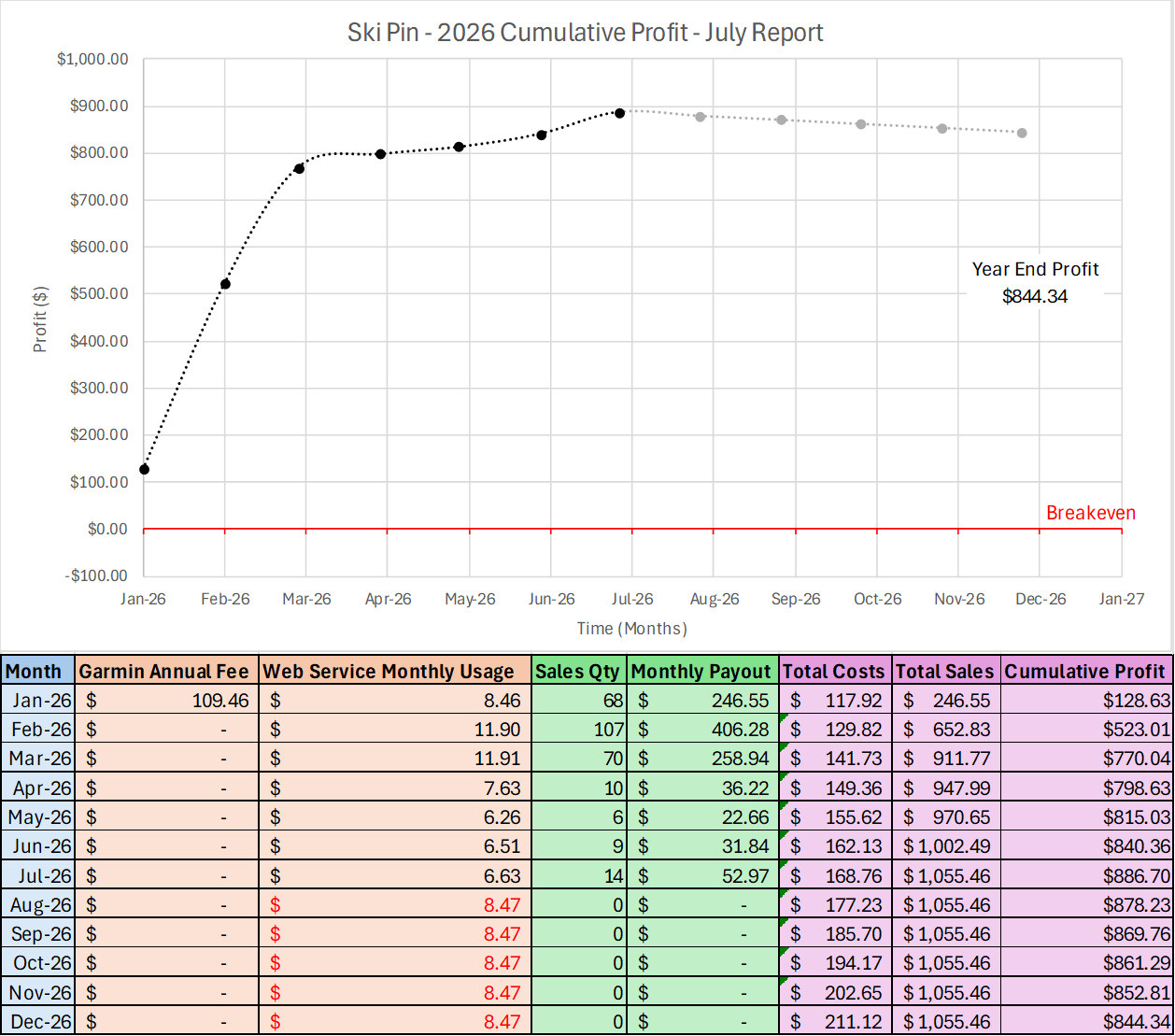

January Sales Analysis

Lessons Learned

The biggest thing I learned is don't be afraid to price your app at what it's worth. I was genuinely worried that no one would be willing to spend more than $2 on a data field, and I almost priced Ski Pin lower because of that concern. But it turns out that if you're solving a real problem for a passionate audience, they may be willing to pay for it. Seasonal apps can absolutely work if you price appropriately for the condensed sales window, just make sure you're not leaving money on the table by undervaluing your work.

What do you think?

I'd love to hear from other developers who've monetized their apps, how did you approach pricing? Has it been worth it? And for those considering monetization, feel free to ask any questions about the process.

  • You can’t stop crying about it? 
    your app, you think it’s cool, you complain like a female and if you are not happy deleted from IQ but just stop crying about your app! 

  • Will you stop crying about your app?  just pointed some facts but all you do is to cry about your app, it’s cool, some people got in early bla bla cry cry. 

  • You must spend a lot of money on tissues after all that crying! My app, my time, worth while! Cry me a river dude. You are a cry baby and if you are not happy delete your app as it’s clearly nobody wants you to cry about it! 

  • “Or, you are just crazy

    This is a reliable justification (“making money” isn’t.) It’s (mostly) my reason too.”

    yet you just can’t stop crying like a baby as nobody wants your app as you invested time and no developer IQ job and you put a payment and all you do is to cry about it.

  • This is great input, thanks  !

    It’s a mistake to expect that donations would work. My apps have 4000 downloads each (with some overlap) over 7 years and I might have gotten 10 donations.

    Yeah, I think it's helpful for developers to understand that the donation model doesn't typically lead to a reliable source of income. At this point I'm generally happy with the outcome of my first-party monetization experiment, but if you include development time I definitely haven't broken even yet.

    The best outcome is to have enough good reviews such that the bad ones look like exception (and that have reasonable explanations).

    I totally agree. It's unfortunate, but reviews tend to lean negative since many users only revisit the store page when they're experiencing an issue. Getting a base of positive reviews is the only defense against that. I've heard that using the built-in method to request reviews is the best way to boost your overall number of reviews.

    Does anyone have experience requesting a review using StartUserReview() within a Data Field App Type?

    My gut feeling is that this would create a terrible user experience. If I were in the middle of an activity and got prompted for a review, I would find it super annoying. I'm curious if anyone has actually had success trying this.

  • Valid opinions but I will continue to support developers who share their work for free! I think it’s more of a community effort but who knows, maybe I don’t understand how things really work. 
    yet if a developer who share his work for free decides to charge every app, I would not blame him. In the end, devs spend hundreds of hours and there is little to no monetisation appreciation from the community. They come, use their work and not even 2% come back for a review and maybe, maybe 0.1% donate something. 

  • This is great input, thanks  !

    You’re welcome. Your contribution was interesting.

    I totally agree. It's unfortunate, but reviews tend to lean negative since many users only revisit the store page when they're experiencing an issue. Getting a base of positive reviews is the only defense against that.

    My items have generally gotten good reviews. That contradicts the idea that they “tend to lean negative”. It’s possible that that’s more of a problem for paid apps.

    I have a note telling people with issues to contact me directly (and not use the reviews for support). That seems to work to some extent.

    (I’m not a fan of pestering users for reviews.)

  • Reviews are nice but there have been cases of things like a free unlock code for a 5 star review.  To me, that is wrong.

    I do state in my apps that reviews shouldn't used for questions and the user should contact me outside of the review process.

    That said, my app with close to 800k downloads has less that 200 reviews. I also have about 200 reviews for my apps with 50k-100k downloads.

  • Reviews are nice but there have been cases of things like a free unlock code for a 5 star review.  To me, that is wrong.

    Being “paid” for reviews is bad.

    That said, my app with close to 800k downloads has less that 200 reviews. I also have about 200 reviews for my apps with 50k-100k downloads.

    One might only need “enough” positive reviews. If one gets enough positive reviews, people are likely to see the (few) bad reviews as exceptions (not representative). 

  • February Results Update

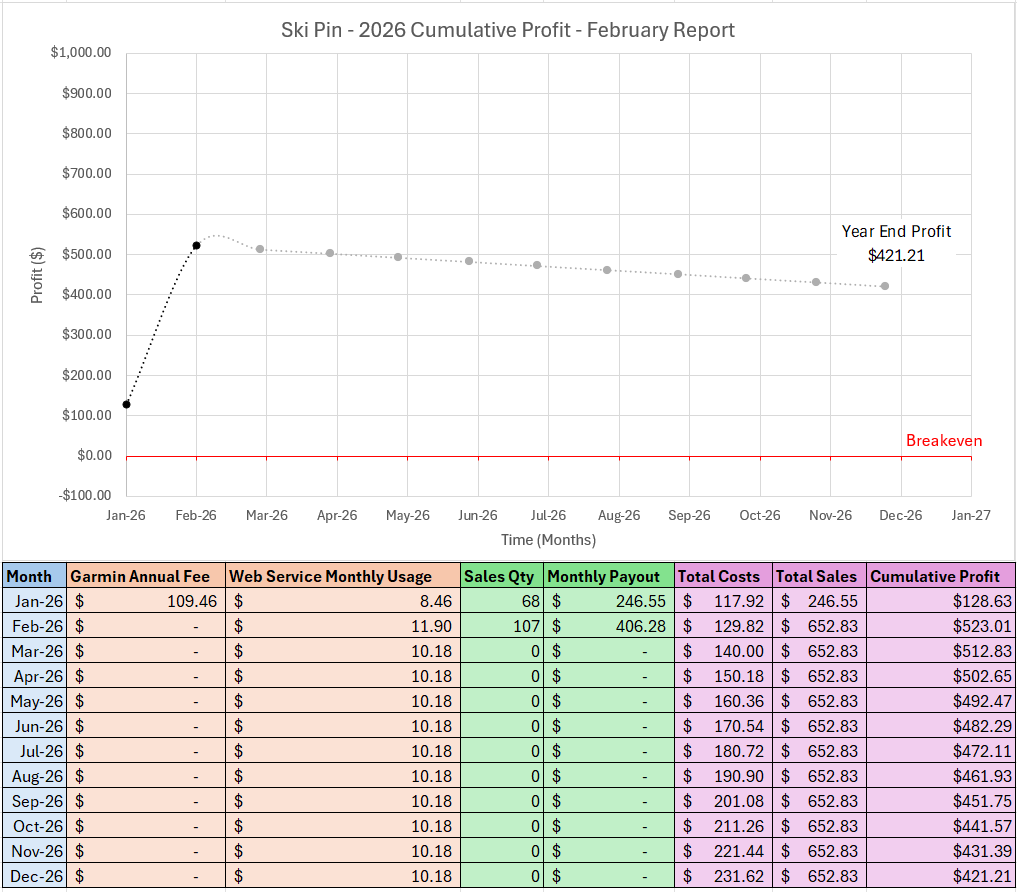
    Here's an updated chart with February's numbers for Ski Pin! Sales improved, 107 copies sold this month compared to 68 in January. The increased sales/usage did push my backend costs up slightly to $11.90, but I released a data field update with a smart ping mode that should help bring that down slightly. The new version only pings the backend when you've moved a certain distance, it pings faster when you're actively skiing but slows down when you're stopped in a lift line or taking a break. It also checks if you're near any ski features and reduces the ping rate if you're not, so if someone goes for a jog with the data field active it's not hammering the server unnecessarily.

    February Sales Analysis

    CIQ Sales Dashboard

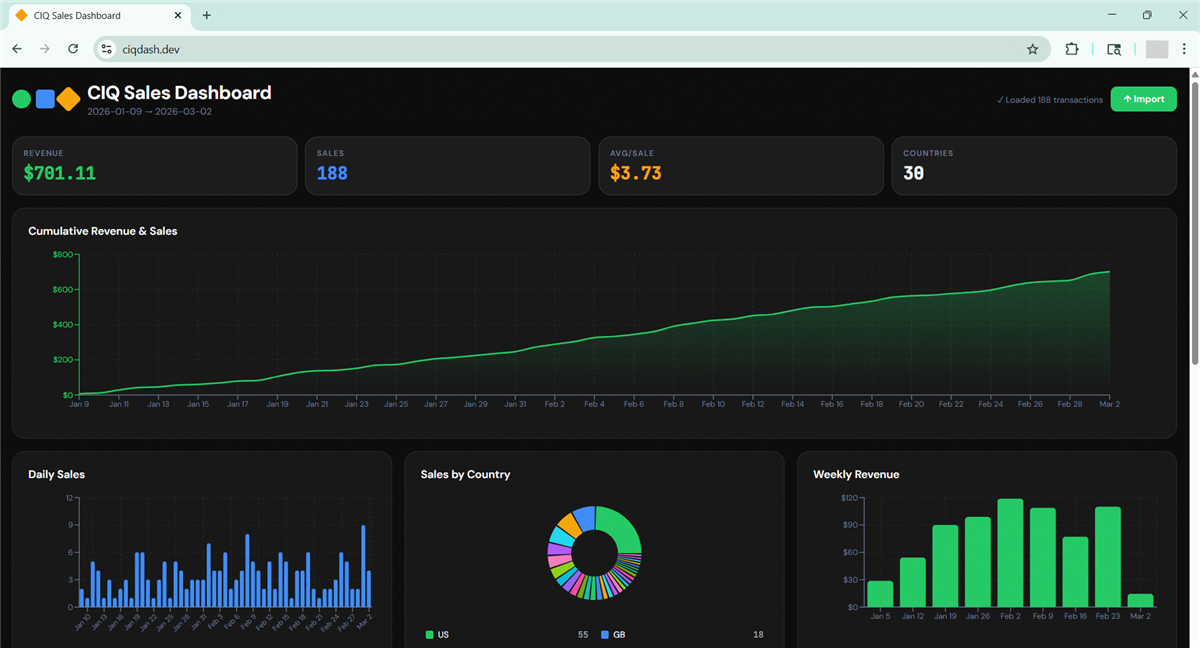
    I also experimented with Claude Code to build a site called CIQ Dash for visualizing Connect IQ sales data. You can load the sales reports that are available on the apps-developer portal (Merchant account > Documents > "+ Request") and it'll give you some charts and insights. Everything runs locally in your browser, no tracking or data collection. Source code is on GitHub if anyone wants to check it out: https://github.com/cdphx4/CIQ-Dash


    CIQ Sales Dashboard Side Expedition

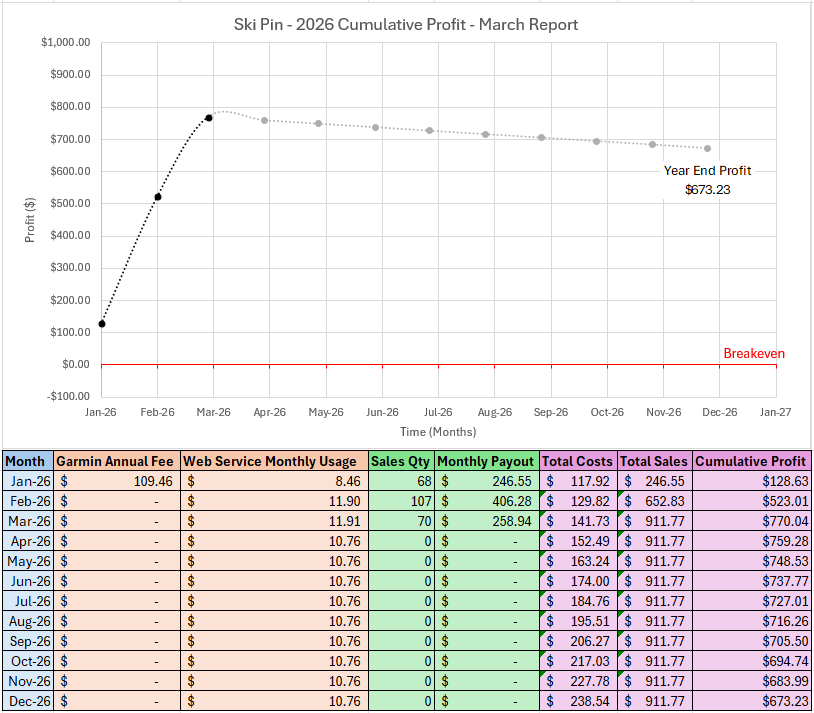
    Curious to see how March goes as we start to near the end of ski season.