


About Ski Pin
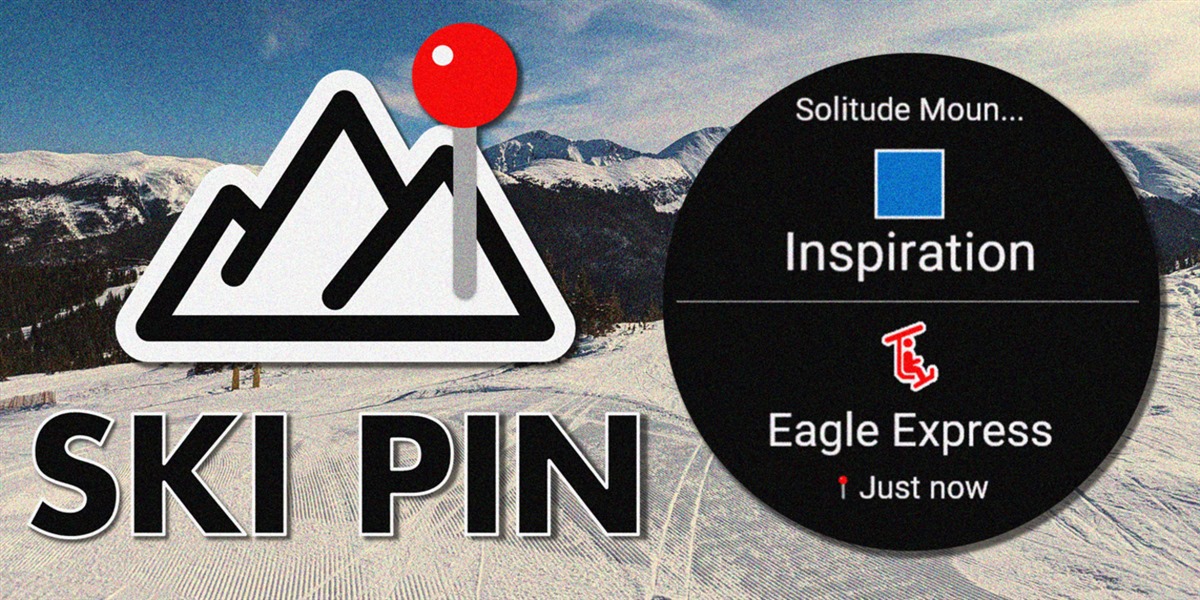
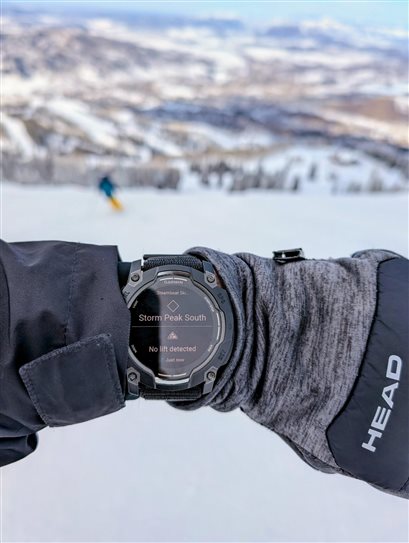
At the beginning of the 2026, I released a new data field for winter sports called Ski Pin. Ski Pin shows you the name of the ski run you're on, the run difficulty, and which lift is nearby. The CIQ app itself is straightforward, it gets your GPS coordinate and queries a custom web backend that checks the coordinate against OpenSkiMap data. Since there's a monthly cost to run the backend, I decided it'd make sense to monetize the data field to try to cover my costs. And I felt that the Ski Pin concept was unique enough in the CIQ ecosystem that passionate skiers may be willing to pay for the app.
I wanted to share my experience with monetization because I think it's valuable for other developers to see real numbers and understand if it's actually viable.
Monetization Math
For those who haven't looked into first-party monetization, there's a $100 annual fee and then a 15% service fee on all sales. At the beginning of the project, I didn't have a great understanding of how much the backend would cost to run. After doing some research I estimated that with modest adoption, it wouldn't be more than ~$20 a month. So my worst case annual cost would be around $100+$20*12months = $340/yr.
I really struggled with determining the price point for Ski Pin. I didn't want the price to be a significant barrier of entry, but I was eager to recoup my costs. To make $340, I would need to sell $400 in product to cover the 15% service fee. Since skiing is a seasonal sport, I figured a vast majority of my sales would occur in the first 4 months of the year, so I'd need to make ~$100/month. My goal was to make one sale a day on average. So monthly, $100/30 sales puts the price point at $3.33. I rounded that up to $4 to give some breathing room in case I didn't hit my target.
Ski Pin in the field
First Month Results
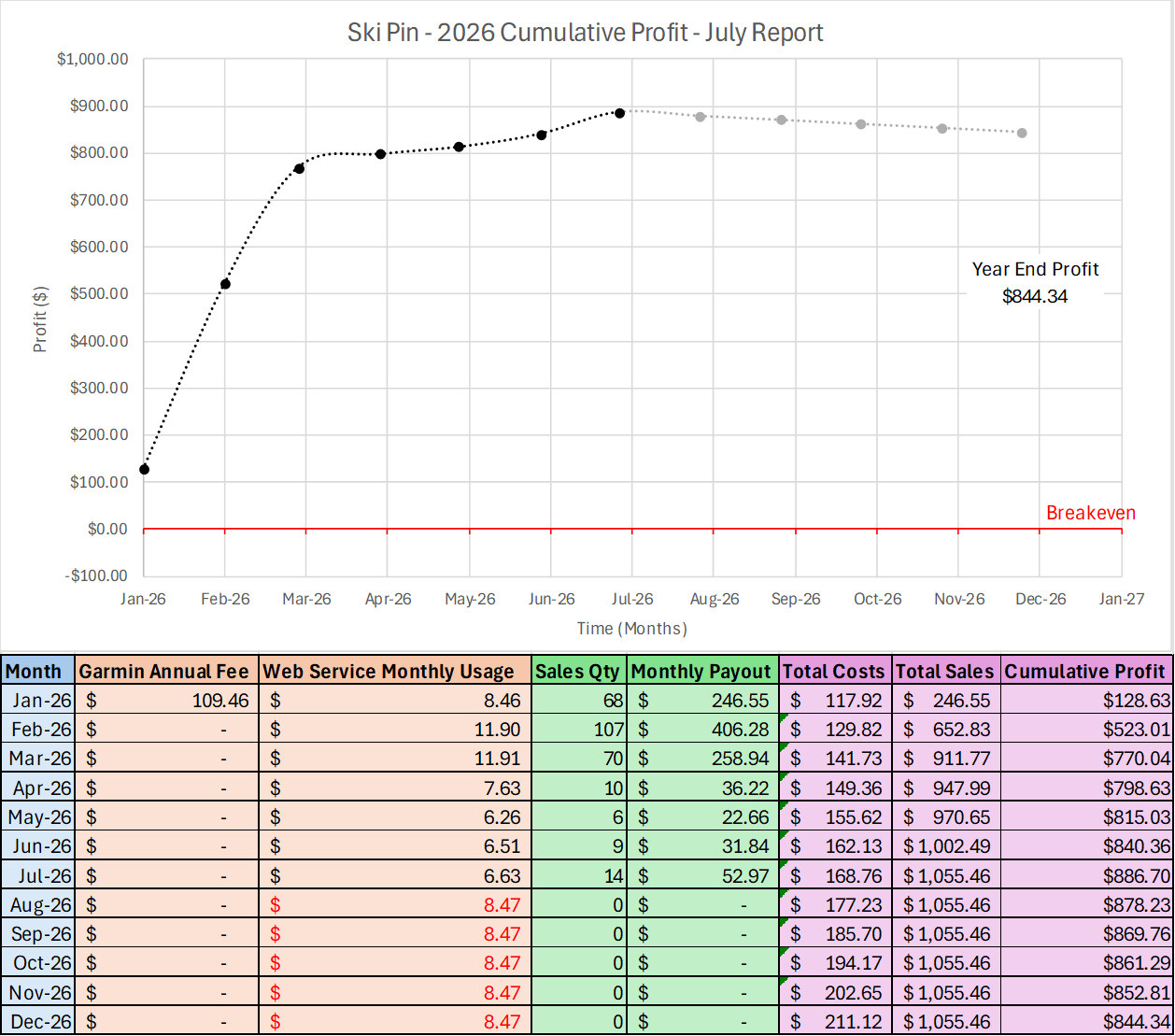
Looking back on January, two things worked in my favor. First, my backend cost estimate was high. My real cost was $8.46, significantly less than my $20 estimate. Second, I made a lot more sales than I expected! I sold 68 copies in January.
Below is a graph I'll be updating monthly with sales data. If I project out my monthly costs for the rest of the year with no additional sales, it looks like I'll still break even. That was my primary goal with this project.
*Updated* July Sales Analysis
Lessons Learned
The biggest thing I learned is don't be afraid to price your app at what it's worth. I was genuinely worried that no one would be willing to spend more than $2 on a data field, and I almost priced Ski Pin lower because of that concern. But it turns out that if you're solving a real problem for a passionate audience, they may be willing to pay for it. Seasonal apps can absolutely work if you price appropriately for the condensed sales window, just make sure you're not leaving money on the table by undervaluing your work.
What do you think?
I'd love to hear from other developers who've monetized their apps, how did you approach pricing? Has it been worth it? And for those considering monetization, feel free to ask any questions about the process.


