Here's how bad the optical heart rate is on the FR265

There are a lot of posts on this forum of users experiencing erratic and/or unreliable heart rate readings from the optical heart rate sensor on the FR265. I am one of those users. I previously had a FR45 and do not recall any major HR inaccuracies from the OHR sensor on that watch. When I upgraded to the FR265 (or what I thought was an upgrade), I was shocked and puzzled that the heart rate reading was all over the place -- usually it was too low (based on what I know by feel) and often jumped up by 10, 15 or more beats from one reading to the next. The "solution," if you want to call it that, was to wear a chest strap. (FWIW, I tried multiple wrist positions and strap tightnesses with no improvement.) But again, I didn't seem have this issue with my FR45, at least not to this degree, so what is going on with the FR265?

I decided to conduct an experiment to see just how bad it is. I also have an Edge 830 that I use for cycling. So I brought my Edge 830 to the gym for a recent strength workout. I wore my chest strap and connected it to my Edge. My FR265 was on my wrist with the optical sensor reading my heart rate. I started activities on both devices simultaneously. After the workout, I downloaded the .csv data into Excel and plotted both sets of HR on the same chart.

Here are the results. The blue line is my heart rate as recorded by the Edge with a chest strap. The orange line is the FR265 with optical heart rate. The workout started with a casual 10-minute steady 7-MPH jog on the treadmill. The peaks that follow are my sets of lifts. 
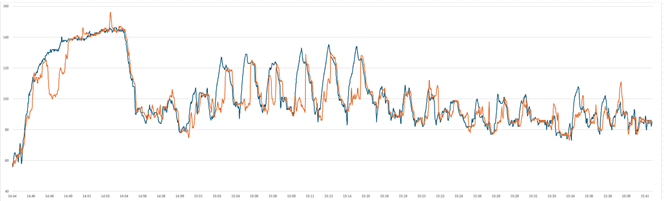
Note the gap between the Edge and the FR265 -- especially during my treadmill warm-up. What is going on here?? The FR265 was jumping up and down randomly. I have no idea what that random spike is.
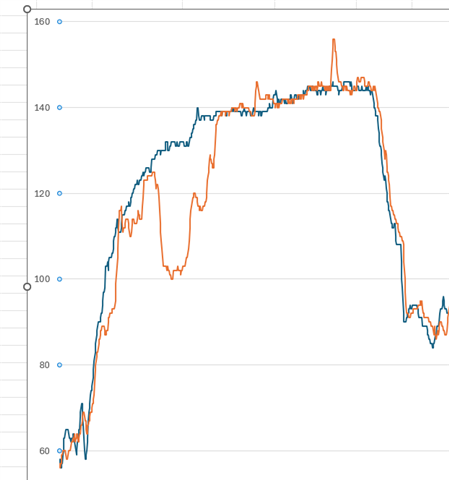
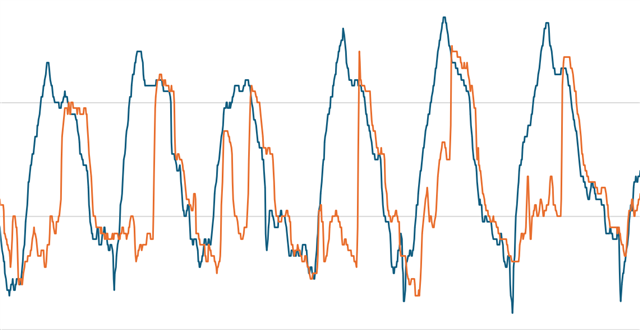
Here is my HR during some of the lift sets. Again, the FR265 HR was all over the place and the gap between the two is huge.
Some stats:

Greatest jump from previous reading: Edge: 6 BPM. FR265: 18 BPM. (How can my HR jump 18 BPM within one second? I had 13 readings where it jumped seven or more BPM within one second.)

Average difference between the two devices: 6.27 BPM

Greatest difference between the two devices: 38 BPM

Percentage of readings with more than 10 BPM difference: 20.1%

What this boils down to is that the OHR sensor on the FR265 cannot be trusted and is, in effect, worthless. The question therefore is what, if anything, Garmin is going to do anything about this. Considering the FR265 is no longer a "current model" on Garmin's website and has been superceded by the FR570 as the mid-tier running watch, I'd say the answer to that question is "nothing."

  • Grarmin is busy addressing the Oprical HR sensor issues on the x70 series if you go read the posts, at least there were complaints when I last looked at the 270 series successor to the 265. The data is semi reliable for runs for me. The bug-a-boo seems to be in the filtering, make an extreme change and the watch lags then plays catch up. That is on my older firmware version, I have not updated in a while. 

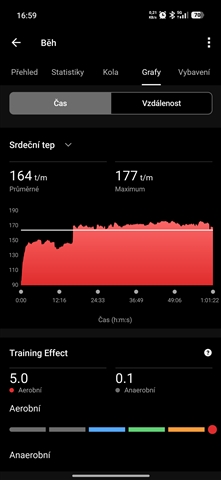
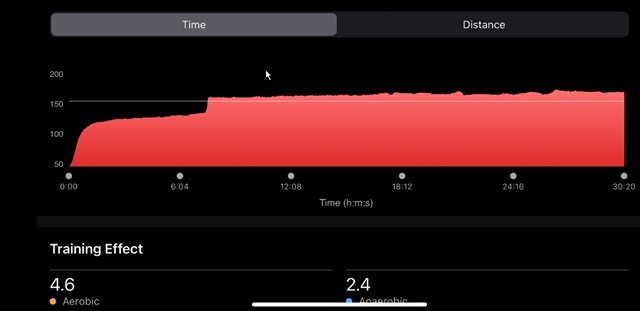
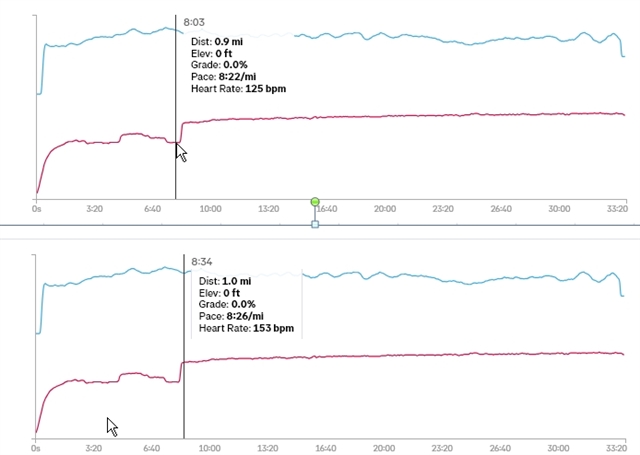
    I start out hard on a run, no real warm up, especially on the treadmill. 8-9 minutes in the watch takes a sudden jump up to a believable value from an abnormally low value. 10-15 BPM vertical jump. It's not me, it's not the sensor (per say), it's the processing of the sensor data, doubtless there are characteristics of the sensor that lead them to the awful filtering. 

    At least once it makes the jump (on a run) it seem reasonably reliable, though I sure wouldn't trust it for peak efforts. into the run I'll change pace but  usually it's a much slower change than starting out from nothing.

    I wish I had the code for the filtering to see exactly what they are doing because in a nutshell, based on my usage the current filtering SUCKS. I think about upgrading the firmware to current but I've seen nothing that makes me believe it will fix the HR and I've seen enough adverse effects posted to prevent jumping into a a rash decision to update.

  •   That's the one! Except mine happens around 8 minutes instead of 16. If I skip the treadmill run and go right to the stair climber which has a slower up build in HR intensity, I don't normally see the vertical shift. If I had to guess Garmin has seen or gotten complaints about sporadic readings from the Optical HR and they filtered the sensor heavily to try and get rid of the transients with the vertical cliff as an unintended consequence.

    Garmin send me the Optical HR processing formula, I'll take a run at it. I already sent in a suggestion for filtering and had it been put to use, I'd expect to see a better result but it's impossible to be certain in the absence of any relevant information. 

  • The WHR "Elevate 4" is always actual with some models Fenix E for example ...

    What was the temperature ? in the past this was the principal cause of my issue

  •    For me at least temperature doesn't seem to be an issue at least not for the jump problem I've experienced it over a fairly wide range of temperatures, for the moment call it 50 to 70 deg F and both in the gym and outdoors, the image is from an indoors 3.5 mile treadmill run.That doesn't mean there isn't some temperature related issue I haven't noticed, my last outdoor run was at about 50 deg and the chart didn't hold the same pattern that I might have expected but it could have just been me that outing.

    The FR245 (locked in on an older firmware version than the last FR245 releases) worn simultaneously on the other wrist does not demonstrate the problem of the sudden jump. The averages between the two watches are not far off but there is no explainable reason for the sudden jump about 8 minutes into an indoor steady pace run.

  • Here's tonight's bit of joy; on a 4 mile indoor treadmill run at a steady pace the Garmin Optical HR reading jumps by 28 BPM in under 30 seconds at 8:30 into the run . Meh, what filtering problem?!

  • Tonight I had to wait for a treadmill. Normally I do a treadmill run followed by time on a stair stepper. I never see the steep HR jump on the Stair Climber and I wasn't sure if it was because it had a slower HR ramp and slightly lower avg HR or if it was because it was the 2nd exercise. While I was waiting I did some minor time on an Elliptical, 10 minutes maybe, only took the HR to just over 100 and the average would be less. The treadmill freed up, I did a short tempo run of 2.25, started at a harder than average pace and look Ma, no vertical step.

    Garmin Guy(s) you HAVE to be able to FIX THIS. If I can get a good chart just because I did a minor amount of warm up before tackling an effort (even if it was a short one) why can't you do it without the warm up. What is the crux of the problem you are trying to address with the filtering???   

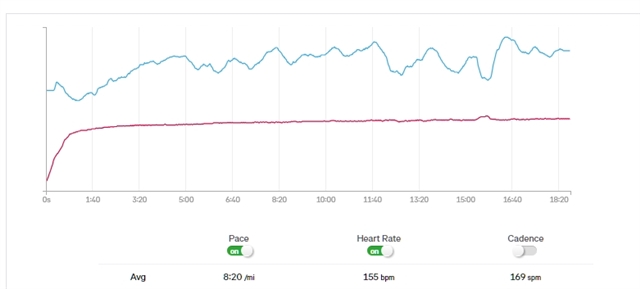
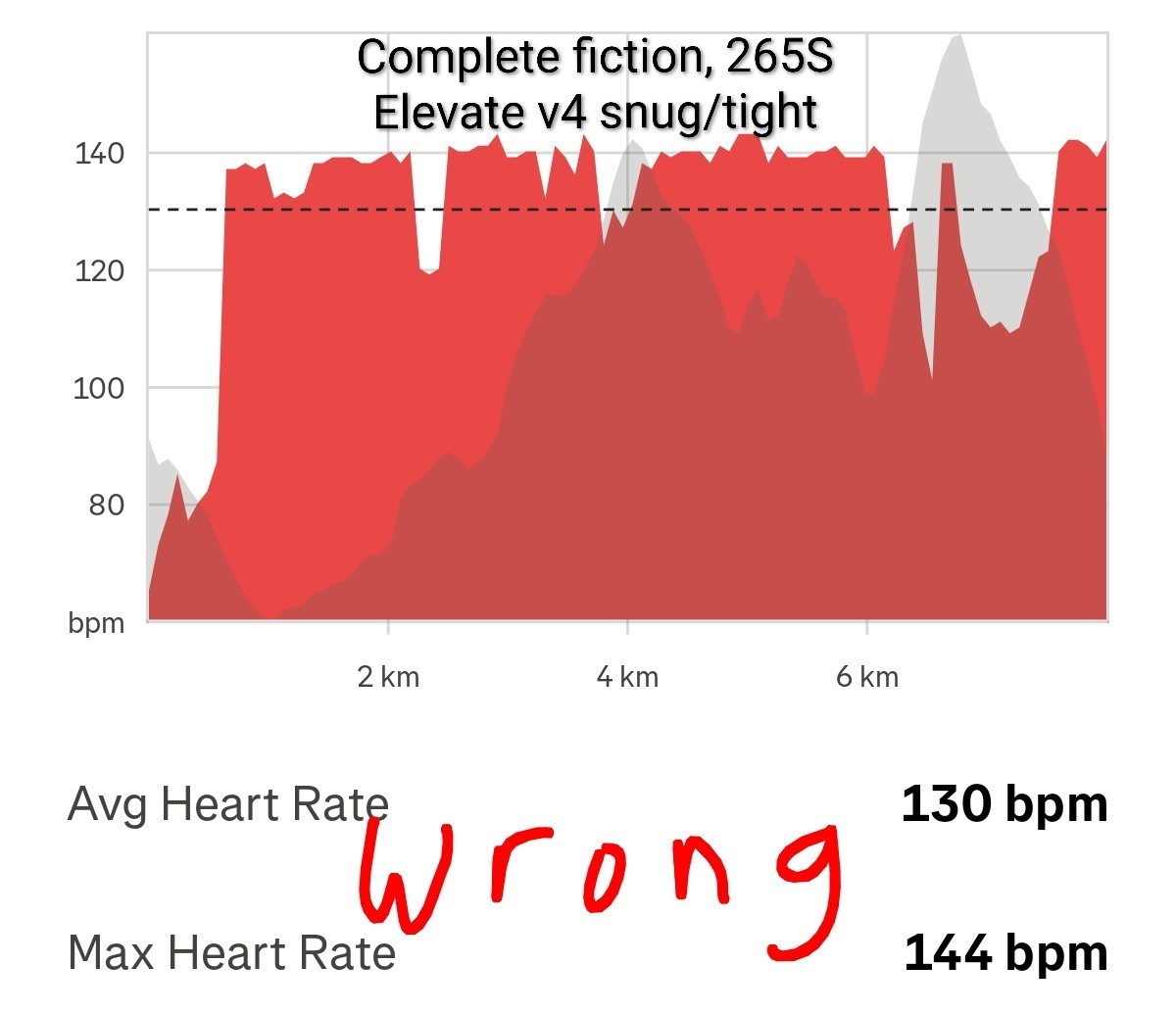
  • Hi all, I'm having issues that sound similar. My first week of using 265S, with a 23 year background of training with HR using a chest strap. So, I wore both old and new monitors. Here's what my HR was actually doing on an outdoor run:

    I know from experience that's 100% accurate. Here's what my 265S recorded whilst snug on my slim (16cm) wrist (and adjusted multiple times, tighter etc:

    You can see the abrupt jumps, and completely different zone (incorrect data) for the whole run. On another run it recorded falsely low, jumping up to something near normal a few times.

    Whilst sedentary indoors the 265S seems ok - it tracks low HR as I'd expect, records a correct minimum, and tracks sleep as well as you'd expect from this type of device.

    I haven't contacted support yet.