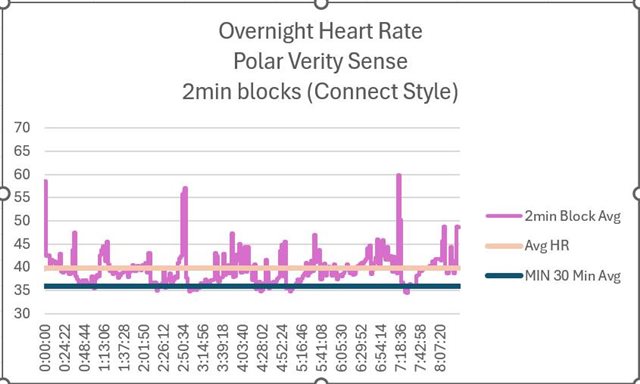
Since receiving a Garmin Index Sleep Monitor for Christmas, I noticed a step change in my resting heart rate. Based on other posts on these forums, I suspect there is an issue with this device, so I ran an overnight test, recording my heart rate with a Polar Verity Sense armband monitor and the Index Sleep Monitor (ISM).
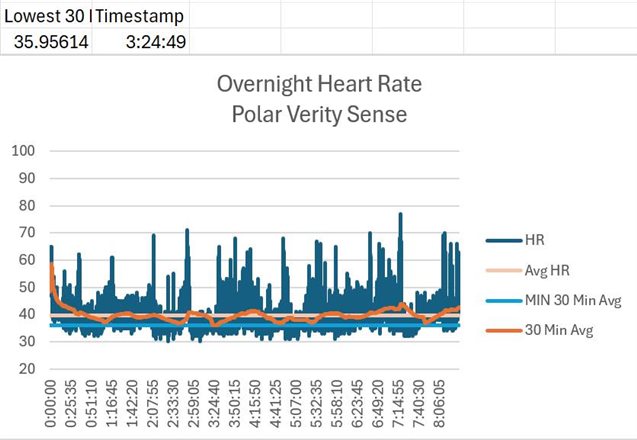
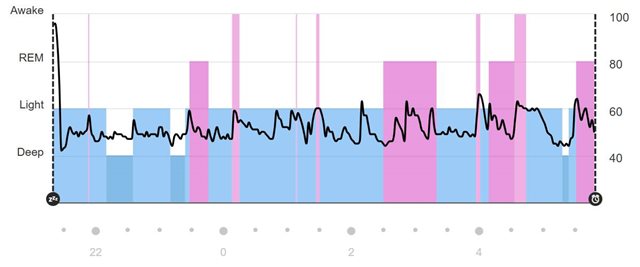
These images show heart rate data recorded from the Polar Verity Sense (right arm) and the Index Sleep Monitor (left arm).
As you can see, the two heart rates tell very different stories. As recorded by the Polar Verity Sense, I computed the lowest 30-minute rolling average heart rate (Resting Heart Rate), which was approximately 36 bpm. According to the ISM, my overnight RHR was 47 bpm, which was an 11 bpm difference.
Digging into the files stored on the device, I found a fit file called "settings.fit."
This file contains numerous settings, some of which were incorrect. Most importantly, I see a setting "Resting Heart Rate (bpm): 50". I suspect the ISM has incorrect settings that are filtering data quality. I believe that the resting heart rate, as seen in the settings.fit file, is the device's reference heart rate (i.e., its true north). When the device strays too far from that, it corrects its signal effectively saying "I should be closer to 50 even though I see 36bpm...readjusting detected heart rate."
Performing a factory reset did not change the settings.fit file, as my resting heart rate is still the same as before.
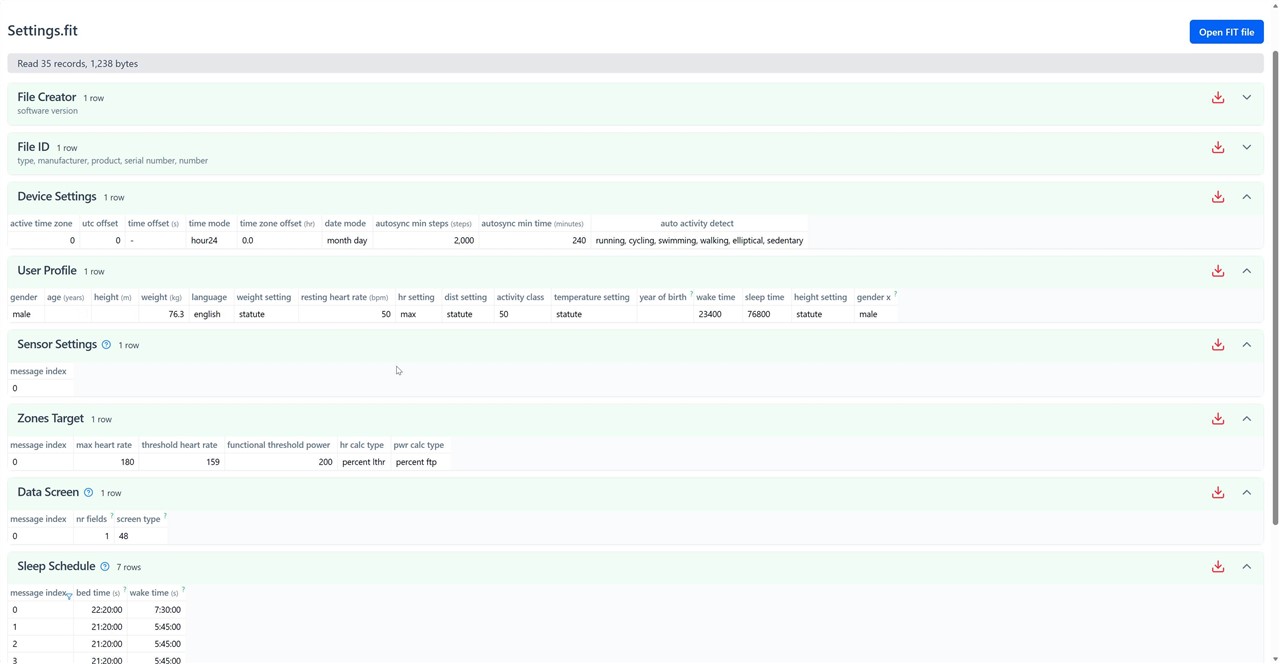
What I am unsure about is if 50 is a hardcoded number or not. However, given that other users have reported higher than expected resting heart rates using this device, I hypothesize that the users seeing the data might have a resting heart rate in the settings.fit file that is not representative of their true RHR as defined by Garmin's definition.
Edit: I am providing another chart that uses Garmin Connect reporting style in 2-minute blocks. You can still see there is a shift in the heart rate when compared to the ISM data.